What Is UTMB? What Does the UTMB Score (Index) Mean?
RaceTurkiye
August 7, 2026 · 7 min read
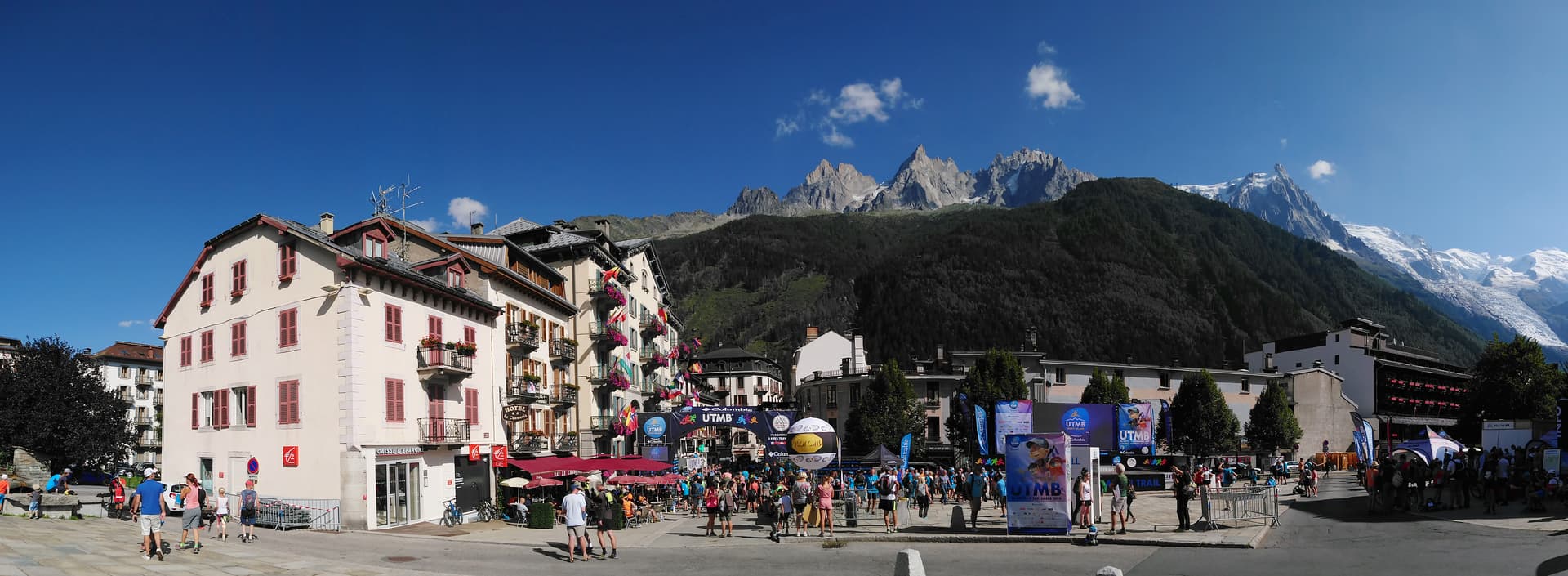
Anyone who spends enough time around trail running eventually runs into the same four letters: UTMB. Is it a race? A scoring system? A brand? At first glance it can look like all three at once — and it is. This post untangles exactly that: what UTMB actually is, what the "UTMB score" people talk about really measures, and whether similar systems exist elsewhere in the world. No prior knowledge assumed — we start from zero.
What UTMB actually is
UTMB stands for "Ultra-Trail du Mont-Blanc" — a legendary ultra-trail race that started in 2003 in Chamonix, France, circling Mont Blanc through France, Italy, and Switzerland. The flagship course is roughly 170 kilometers with over 10,000 meters of elevation gain; finishers typically take somewhere between 30 and 46 hours.
Over time UTMB grew into something bigger than a single race — it's now a race week and a brand. The Chamonix event itself hosts multiple races over the course of the week, ranging from 100 miles down to 15 kilometers (sibling courses known by acronyms like OCC, CCC, TDS, MCC). More importantly, UTMB is now the name of a global race series: the "UTMB World Series" spans dozens of countries — including Salomon Cappadocia Ultra-Trail in Turkey — and sends top finishers from each event toward the final in Chamonix. So for a runner, UTMB is both a specific race you can travel to and a global ecosystem of races you can take part in.
What is the UTMB Index, and how is it calculated?
This is where the real confusion starts. When people say "UTMB score," they usually mean the UTMB Index — a system that boils a runner's trail-race performance down to a single number between 0 and 1000. The higher the number, the stronger that runner is considered within their category (distance group).
How is that number produced? Roughly a four-step process: first, the races a runner has completed are made comparable to one another (each race's own difficulty — distance, elevation gain, altitude, course profile — is factored in); then an "expected" performance range for that race is estimated; next, high-confidence data is selected (noisy outliers, like a one-off freak performance or a race with a tiny field, get filtered out); finally, the runner's race pace is converted into a final score on that comparative scale.
There are two separate time windows worth knowing, and they're often mixed up:
For a runner's Index to be considered "valid," they need at least one race result within the past 24 months — someone who hasn't raced in over two years may still see an old score in the system, but it's no longer treated as current. The score's actual calculation, though, can draw on results going back up to 36 months (three years), weighting the strongest performances more heavily to produce an average. So "validity" and "calculation window" are two different things — one answers "are you still active," the other answers "what data makes up your score."
One more detail worth knowing: the Index is category-specific. To have an Index for a 100-mile (roughly 160K) race, you need to have previously finished a race of at least 115K — being very strong at short distances doesn't automatically mean a high score at long ones.
Running Stones: how registration priority works
Entry into the UTMB World Series Finals (the flagship Chamonix event) is capped, and demand far exceeds supply — so UTMB runs a separate award system called Running Stones. The logic is simple: finish a UTMB World Series race anywhere in the world, and you earn stones based on its distance.
Roughly 20K races award 1 Stone, 50K races award 2 Stones, 100K races award 3 Stones, and 100-mile (roughly 160K) races award 4 Stones. The series' larger events, the UTMB World Series Majors, award double that — the same 100 miles is worth 8 Stones at a Major. The distinction is easy to miss, and missing it doubles what you expect to earn.
| Category | World Series Event | Major (double) |
|---|---|---|
| 20K~20 km | 1 | 2 |
| 50K~50 km | 2 | 4 |
| 100K~100 km | 3 | 6 |
| 100M~160 km | 4 | 8 |
Unlike Index points, Stones don't expire — they accumulate over the years. There is one condition: to enter the lottery, at least one of your Stones must have been earned in the past two years. The pile is permanent, but going fully dormant closes the door. When you want to register for the Chamonix final, every Stone you hold becomes one entry in the lottery draw: the more Stones you have, the better your odds of being selected. In effect, a runner who regularly races the UTMB World Series steadily improves their own chances of eventually reaching Chamonix.
One detail not to skip past: not every UTMB race awards Stones. You can validate your UTMB Index at more than 5,550 races worldwide, but Running Stones come only from UTMB World Series events. In UTMB's own words, finishing an Index race contributes to your Index but does not provide Running Stones. In Türkiye the practical upshot is simple: the country's only UTMB World Series event is Kaçkar by UTMB.
UTMB Index race
5.550+ races worldwide
- Contributes to your Index — yes
- Running Stones — no
UTMB World Series event
A limited set, a few per country
- Contributes to your Index — yes
- Running Stones — yes
To enter the Chamonix lottery
a valid UTMB Index + at least 1 Running Stone
Are there similar systems elsewhere in the world?
There are — and, notably, one comes from almost the same root. ITRA (International Trail Running Association), the sport's international governing body, runs its own "ITRA Performance Index" — also on a 0-1000 scale, working on essentially the same logic as the UTMB Index. That's not a coincidence: until 2021, UTMB and ITRA shared the same scoring algorithm; after that, UTMB began developing its Index as a separate system. As a result, a given runner's UTMB Index and ITRA Performance Index tend to land close to each other but not identical — the gap is typically around 20-30 points.
To give a sense of scale: among the world's strongest ultra-trail runners, Jim Walmsley's ITRA Performance Index sits around 942, and Courtney Dauwalter's around 826. Scores near 1000 belong to genuine world elites — for an amateur runner, comparing your own Index to those numbers isn't the useful exercise; tracking your own progress against your own past races is.
This is also exactly where beginners most often get confused: alongside the Performance Index, ITRA runs a completely separate "ITRA points" system (sometimes called a "difficulty rating"). This second one doesn't evaluate a runner at all — it evaluates a race itself, rating course difficulty (based on factors like distance, elevation gain, and technicality) on a scale from 0 to 6. So saying "my Index is 650" describes your own performance, while saying "this race is rated 5" describes the race's difficulty level — the two aren't interchangeable; they measure entirely different things.
These measure the runner
“My score is …”
UTMB Index
0–1000
Your performance in trail races, held separately per distance category.
Needs a result in the last 24 months to stay valid; the calculation looks back up to 36.
ITRA Performance Index
0–1000
A runner rating on the same logic. Until 2021 it shared UTMB's algorithm.
Typically 20–30 points off the same runner's UTMB Index.
These measure the course
“This race is … points”
ITRA difficulty points
0–6
The course's difficulty: distance plus cumulative climb. Nothing to do with the runner.
Awarded per distance, not per event.
UTMB category
20K / 50K / 100K / 100M
Which distance bracket the course counts towards; your Index is kept per bracket.
Being strong in one bracket does not carry to another.
What does this mean for an amateur runner?
If you're just starting out, the healthiest approach is not to get hung up on these numbers. Your UTMB Index will build up over time, race by race — don't expect a meaningful score right after your first race, since the system needs a few data points to produce something reliable. Some races (particularly those tied to the UTMB World Series, like Salomon Cappadocia Ultra-Trail in Turkey) may require a minimum Index threshold to register — this functions mainly as a safety filter, meant to show you have the experience to safely finish the course.
In short: the UTMB Index is a way to objectively track your own progress, and Running Stones is a loyalty system where consistent participation edges you closer to the big final. Neither is something an amateur runner should be intimidated by — both are tools for setting goals.
Sources: - UTMB World, official "UTMB Index" page — https://utmb.world/utmb-index/info - Wikipedia, "UTMB Index" — https://en.wikipedia.org/wiki/UTMB_Index - Trail & Kale, "UTMB Index 2026 Update Explained" — https://trailandkale.com/utmb-index-2026-update-explained/ - Endu1, "A Complete Guide to UTMB Index Points and Stones" — https://www.endu1.com/blogs/races-and-events/a-complete-guide-to-utmb-index-points-and-stones - Finishers, "The Different Types of Points: UTMB Index, Running Stones, ITRA Points" — https://www.finishers.com/en/the-different-types-of-points-utmb-index-running-stones-itra-points - Wikipedia, "Ultra-Trail du Mont-Blanc" — https://en.wikipedia.org/wiki/Ultra-Trail_du_Mont-Blanc

Comments & Questions
Sign in to comment
No comments yet. Be the first to write one!