How to Use the Nutrition Planner: Getting Your Race-Day Carb, Fluid, and Sodium Targets Right
RaceTurkiye
September 18, 2026 · 7 min read
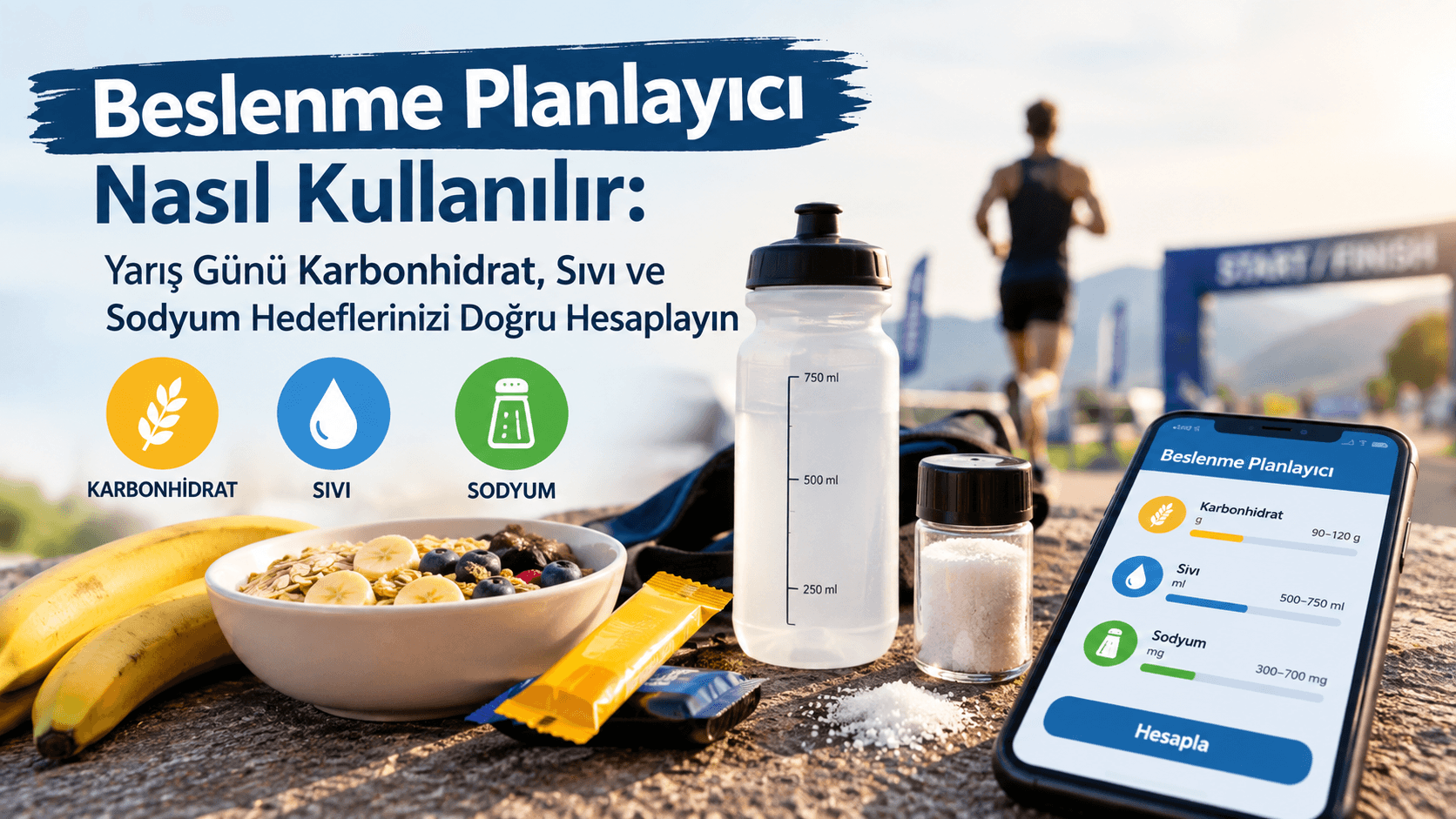
Most runners don't get beaten by their training on race day — they get beaten by their gut. The usual cause is simple: not enough carbohydrate, not often enough. Race Türkiye's Nutrition Planner tool takes that calculation out of guesswork and grounds it in published sports-science guidelines. This guide walks through how to use the tool, where the numbers behind it come from, and how to actually apply the plan on race day.
What the tool does — and doesn't do
The Nutrition Planner takes your body weight, estimated race duration (or a GPX file of your route), and your product preferences, and returns hourly carbohydrate, total fluid, and total sodium targets — plus a concrete "how many gels/drinks/bars to carry" list.
One thing worth saying upfront: this is not a personalized dietitian. It deliberately does not scale the carbohydrate target by body weight — the published guidelines it's built on state targets in absolute grams/mL/mg per hour, not per kilogram. A 70 kg runner and a 55 kg runner get the same hourly carbohydrate target, because the limiting factor is how fast the gut can absorb carbohydrate, not body mass.
Step 1: enter your weight and duration
The first section asks for body weight (kg) and estimated finish time (hours:minutes). These two fields always work — you don't need a GPX file for the plan to run.
If you don't have a hard target time, the most reliable estimate is your actual finish time from a past race with a similar profile (distance + elevation gain). If you're unsure, err on the high side: a longer estimated duration means the plan gives you slightly more carbohydrate and fluid than you'll strictly need, and finishing early just leaves you with extra product. Underestimating, on the other hand, raises your risk of bonking mid-race.
Step 2 (optional): upload a GPX file to derive duration from the route
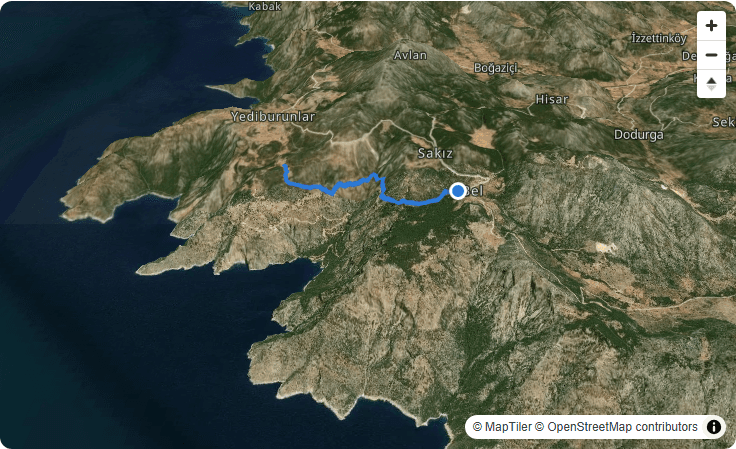
If you have the route's GPX file, you can skip typing a duration manually. When you upload one, the tool:
- Asks for your flat-ground pace (min/km),
- Recalculates that pace segment by segment based on the route's elevation profile,
- Feeds the resulting total time straight into the nutrition targets.
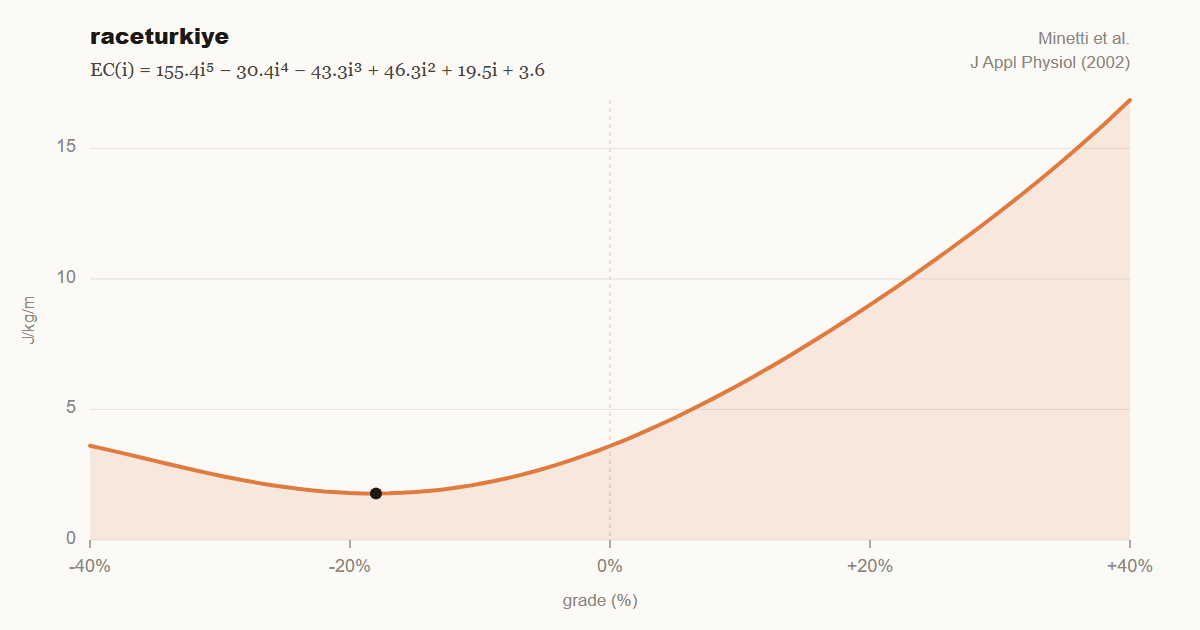
This grade-adjusted calculation is based on Minetti et al.'s 2002 model of the energy cost of walking/running as a function of slope (Minetti et al., 2002, Journal of Applied Physiology). So "how much do I slow down on a 10% climb" isn't a personal guess — it comes from a physiological model.
Uploading a GPX file also unlocks an extra output: a kilometer-by-kilometer carbohydrate timeline. It splits the route into 8 evenly spaced distance points and shows cumulative carbohydrate you should have consumed by each one — e.g., "by km 17, at roughly 2h10m in, you should have taken in about 130g total." That's a genuinely useful reference for deciding when to open each gel.
Step 3: set your product preferences
You can select any combination of gels, drink powder, and solids/chewables. If you select more than one type, the tool splits your total carbohydrate target evenly across the selected types, then rounds up to whole servings based on each type's typical carbohydrate content.
Caffeine preference (none / low / high) doesn't change the carbohydrate math — it only adds a timing note (e.g., save caffeine for later in the race). That's intentional: caffeine's effect on performance is mostly about timing, not carbohydrate absorption rate, so the tool keeps the two variables separate rather than conflating them.
Reading the plan
The results show four core numbers:
- Carbohydrate per hour: 60 g/hour for races up to 2.5 hours, 90 g/hour beyond that. This threshold comes from the American College of Sports Medicine (ACSM)'s position on carbohydrate intake during exercise. Above roughly 60 g/hour, relying on a single carbohydrate source (glucose alone) outpaces what the gut can absorb; reaching 90 g/hour is possible because mixing carbohydrate types (glucose + fructose, for instance) lets the gut use multiple absorption pathways at once — this is why most "dual-source" gels and drink mixes on the market use blended sugars.
- Total carbohydrate (g): the hourly target multiplied by total duration.
- Total fluid (L): based on a 400 mL/hour default — the midpoint of the 300–600 mL/hour range cited in ultra-endurance nutrition literature. That range exists because actual sweat rate depends heavily on heat, humidity, and individual physiology, none of which a duration or GPX file alone can tell you, so the tool gives you a sensible starting point rather than a false-precision number.
- Total sodium (mg): based on a 450 mg/hour default (roughly the midpoint of a 300–600 mg/hour, or 10–25 mmol/hour, range). Both the fluid and sodium targets exist to guard against exercise-associated hyponatremia (EAH) — low blood sodium from over-hydrating without replacing salt. Drinking too much water without enough sodium is a bigger real-world risk than simple dehydration, and is the mechanism behind several serious medical incidents at long-distance races.
These three targets are grounded in a 2019 review of ultra-endurance nutrition literature, "Nutrition in Ultra-Endurance: State of the Art" (PMC6315825) — a commonly cited reference among sports dietitians working in this space.
Below that sits the serving breakdown: for each product type you selected, how many servings to carry and how much carbohydrate that represents in total. For a 4.5-hour race with only gels selected, for example, you might see something like "13 gels — 325g CHO." The reference serving here assumes roughly 25g of carbohydrate per gel — actual products vary from about 20–27g, so check your specific product's label and nudge the count slightly if needed.
Turning the plan into a race-day routine
There's a difference between seeing the numbers and executing them. Don't try to hit your total target in a couple of big hits — split your hourly target across your product's typical serving size. If your target is 60 g/hour and you're using 25g gels, that's roughly one gel every 20–25 minutes; trying to down two or three gels at once, once an hour, is a much more likely way to upset your stomach.
Never try a product or a quantity for the first time on race day. Your gut, like any other system under load, responds to training — the "train the gut" approach means ramping up toward your target intake rate during long training runs, not discovering your tolerance mid-race.
The 400 mL/hour default fluid target can be too low in hot, humid conditions and too high in cool, dry ones. Treat the tool's number as a starting point; use pre/post-run weigh-ins during training to learn your actual sweat rate and adjust from there.
If you uploaded a GPX file, turn the kilometer-based timeline into an actual pre-race checklist: write down which product you'll take at which kilometer ahead of time, so you're not doing math mid-race — every decision you don't have to make in the moment is one less thing that can go wrong.
FAQ
Why doesn't the carbohydrate target scale with body weight? Because the guidelines it's based on (ACSM and the ultra-endurance nutrition literature) state targets in absolute grams per hour, not per kilogram. The limiting factor for carbohydrate absorption is gut transport capacity, not body mass — so a 55 kg and an 85 kg runner can reasonably share the same hourly target.
Do I need to upload a GPX file? No. Without one, you still get a full plan from your manually entered duration. A GPX file only improves the duration estimate using the route's elevation profile and unlocks the kilometer-based timeline.
Should I target 60 g/hour or 90 g/hour? The tool decides this for you: 60 g/hour for races under 2.5 hours, 90 g/hour for anything longer. Jumping straight to 90 g/hour without training your gut for it raises the risk of GI distress — build up to it gradually in training.
Are the fluid and sodium numbers exact? No — 400 mL/hour and 450 mg/hour are sensible defaults at the midpoint of published ranges (300–600 mL/hour and roughly 300–600 mg/hour, respectively). Your actual sweat and sodium loss depends on weather and individual physiology; use the tool's numbers as a starting point and calibrate with your own training data.
References
- American College of Sports Medicine (ACSM) — position statement on carbohydrate intake during exercise.
- Nutrition in Ultra-Endurance: State of the Art (2019), PMC6315825 — primary reference for the fluid and sodium ranges.
- Minetti, A. E. et al. (2002), Journal of Applied Physiology — grade-adjusted energy cost of locomotion model.
Try the tool yourself: raceturkiye.com/tr/araclar/beslenme-planlayici

Comments & Questions
Sign in to comment
No comments yet. Be the first to write one!