The History of Trail Running: Around the World and in Turkey
RaceTurkiye
August 7, 2026 · 8 min read
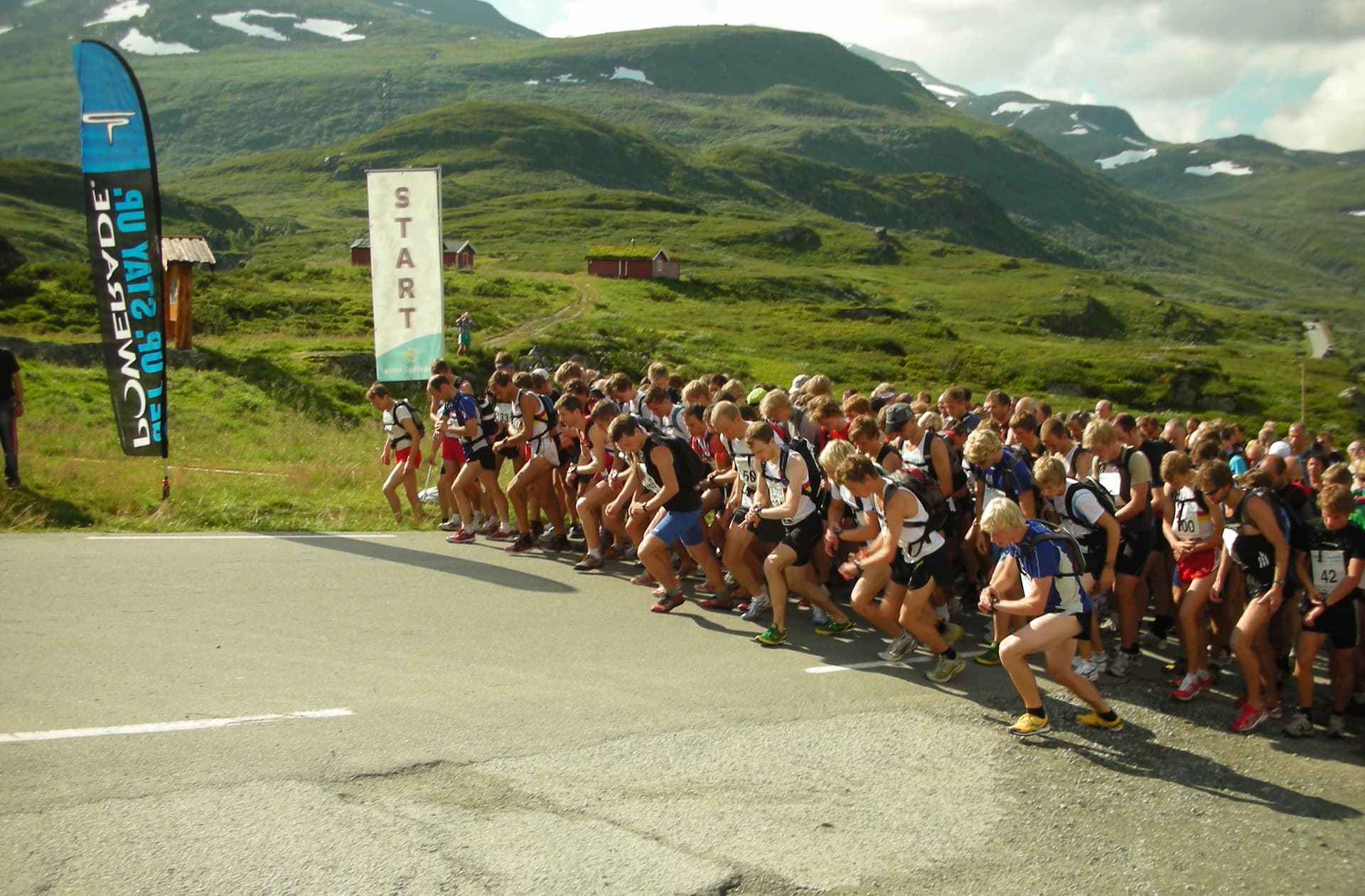
When you stand at the start line of a trail race today, there's a long story behind you. You pin your number, start your GPS watch, your mandatory-kit checklist has been inspected — but this sport's roots reach back to a time with no numbers, no watches, and no packs. From messengers running up a Scottish hill, to English shepherds racing for cash while spectators placed bets, to a 100-miler born out of a Californian horse trail, and finally to thousands of runners threading through the fairy chimneys of Cappadocia. This post tells that story from the beginning — both globally and in Turkey.
InternationallyIn Türkiye
- 1863First recorded fell race — InternationallyIn the English hills, alongside shepherd races and bookmakers.
- 1921Comrades Marathon — Internationally89 km in South Africa: the start of the modern ultra distance.
- 1977Western States 100 — InternationallyRun by 14 people on a horse trail; it established the 100-mile format.
- 1986Marathon des Sables — InternationallyA multi-stage desert ultra in the Sahara, bringing the format to Europe.
- 2003UTMB — Internationally170 km around Mont Blanc from Chamonix; it became the sport's showcase.
- 2010Lycian Way Ultramarathon — In TürkiyeTürkiye's first known large-scale event: 220-240 km over six days.
- 2012İznik and Runfire Cappadocia — In TürkiyeTwo events in one year: 133K around a lake, and 244 km over six desert days.
- 2014Cappadocia Ultra Trail — In TürkiyeToday the country's best-attended trail event.
- 2025Kaçkar by UTMB — In TürkiyeTürkiye's only UTMB World Series event, and the only one awarding Running Stones.
First things first: running on trails isn't new
Seen one way, trail running is simply the oldest form of running there is. In a world without asphalt roads or stadium tracks, running meant running on terrain by default. But as a sport — as a race format — the documented history usually starts in Scotland.
As the story goes, King Malcolm Canmore organized a race at Braemar sometime between 1040 and 1064, reportedly to find himself a swift messenger; the course climbed to the summit of the roughly 1,764-foot Craig Choinnich above the town. That event is considered the ancestor of today's Braemar Gathering. But honesty is required here: historians note there is no documented connection between that race and the fell races of the 19th century. A romantic origin story, then — not an unbroken family tree.
Fell running: shepherds, wagers, and the hills of northern England
The real ancestor of mountain running in the modern sense is the fell running tradition that developed in northern England. Held as part of village festivals in the 19th century, "guides races" were a practical way of settling who the fittest shepherd or laborer in a region was. These were professional affairs: cash prizes for the winner, and bookmakers taking bets on the outcome.
Records point to the first amateur fell race as the Hallam Chase, run in 1863 in the Rivelin Valley near Sheffield. In 1893 the Rivington Pike Fell Race in Lancashire was held for the first time. In the Lake District, the first Lake District Mountain Trial took place in 1952 — and in 1957 it adopted its signature format: the course isn't revealed to runners until just before the start. In 1966, now-classic courses like the Skiddaw Fell Race and the Fairfield Horseshoe joined the calendar.
The best-known symbol of this tradition, though, isn't a race but a "round": in 1932, Bob Graham linked 42 fells in the Lake District within 24 hours. The Bob Graham Round remains one of British mountain running's most respected personal challenges.
Comrades and the birth of ultra distance
On the long-distance side, the turning point came in South Africa in 1921, when the roughly 90-kilometer Comrades Marathon between Durban and Pietermaritzburg was run for the first time. Comrades isn't a trail race — it's run largely on tarmac — but it holds a special place in ultrarunning history as the first major proof that distances beyond the marathon could work as a mass-participation race format.
Western States: a 100-miler born from a horse trail
Modern trail running's defining moment came in California, and curiously it began with horses rather than runners. In 1955, Wendell T. Robie rode the Western States Trail from Tahoe City to Auburn with five horsemen, proving a horse could cover 100 miles in a single day. That gave rise to the endurance ride known as the Tevis Cup.
Years later the same course was attempted without horses, and in 1977 the first official Western States Endurance Run was held with 14 men from four states. It has been run every year since and is recognized as the world's oldest 100-mile trail race. Many practices that are now standard at 100-mile trail races — checkpoints, cutoff times, medical checks, crew support — were largely inherited from endurance riding.
The European boom: Marathon des Sables and UTMB
In 1986, the Marathon des Sables was held for the first time: a multi-stage ultra across the Sahara in Morocco, with runners carrying their own food and equipment. It showed that "extreme running" could capture a wide audience.
But in Europe, the real explosion started in 2003. The first edition of the Ultra-Trail du Mont-Blanc, founded by Catherine and Michel Poletti, drew 722 entrants — only 67 of whom finished the 153-kilometer course. What happened next captures the sport's broader trajectory: participation rose to 1,383 in 2004; in 2005 the 5,000-runner cap filled seven months after registration opened; in 2006 the CCC course was added to absorb demand and sold out in two weeks; in 2007 a qualifying-points prerequisite was introduced and capacity filled in under 24 hours; and in 2008, 6,000 entries were gone in just 8 minutes.
Those eight minutes may be the sharpest summary there is of trail running's shift from niche pursuit to global sport.
Getting organized: associations, federations, and world championships
As the sport grew, institutions formed around it. The Trail Running Association was founded in the UK in 1991, and the American Trail Running Association in the US in 1996. In 2013, the sport's international governing body, ITRA (International Trail Running Association), was established; it was recognized by the IAAF (today's World Athletics) in 2015.
The most recent major institutional step came in 2022, when the first World Mountain & Trail Running Championships were held in Chiang Mai, Thailand. The championships merged WMRA's mountain running world championships with the IAU/ITRA trail world championships into a single event; more than 900 elite athletes from 46 member federations competed. The four-day program featured 80K and 40K trail races alongside classic mountain running and vertical uphill races.
So when did the story start in Turkey?
Pinning down a definitive "first race" date for trail running in Turkey is difficult — mountaineering clubs and hiking groups had been running on terrain for a long time, but not in an organized, recorded race format. The founding years of today's major events, however, are quite clear, and they all point to the 2010s.
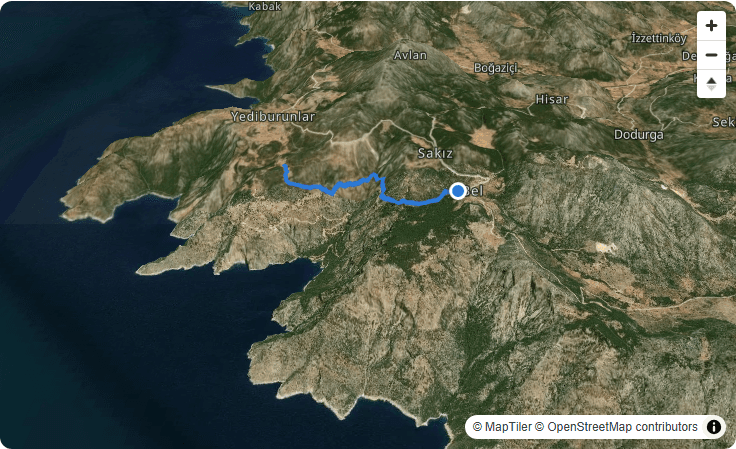
The earliest known major event is the Lycian Way Ultramarathon, first held on 11-17 October 2010. Its format was ambitious from the start: a multi-stage race covering roughly 220-240 kilometers of the 509-kilometer historical Lycian Way, heading east from Fethiye to Antalya over six days. The profile ranged from sea level to 800 meters, taking in sandy and rocky trails, dirt roads, slippery footing in conifer forests, and steep slopes.
2012 saw two significant events launch. The İznik Ultramarathon was first run on 14-15 April 2012; with a course looping around Lake İznik and options at 133K, 80K, 42K, and 10K, it's described as Turkey's longest single-stage athletics event. That same year, on 7-15 July, the Runfire Cappadocia Ultramarathon debuted: a 244-kilometer multi-stage desert ultra spread across six days in Cappadocia.
Then in 2014 came the race that has since become Turkey's best-attended trail event: the Cappadocia Ultra Trail. Organized since 2014 by the Cappadocia-based tour operator Argeus Travel & Events, it is now run under Salomon sponsorship across a UNESCO World Heritage landscape. It carries international standing too: as a UTMB Index race, a result there feeds your UTMB Index. There is a distinction here that is often blurred — Index races do not award Running Stones. The stones that enter the Chamonix lottery come only from UTMB World Series events, and the only Turkish race with that status is Kaçkar by UTMB, first held in 2025.
In Bursa, the Uludağ Premium Ultra Trail has become one of the most established events of recent years, held for the ninth time in 2026. Alongside these, newer events like the Konya Ultra Trail — drawing participants from 13 countries — keep joining the calendar each year.
On the institutional side, the Turkish Athletics Federation organizes the national mountain running championship and European Championship national-team selection races, and Turkey competes at the World Mountain and Trail Running Championships.
Where we've arrived
To pull it together: from a messenger running up a hill a thousand years ago, to shepherd races with bookmakers in 19th-century England, from 14 people on a horse trail in 1977 to a 6,000-entry field selling out in 8 minutes in 2008. And in Turkey, a story that began with a six-day Lycian adventure in 2010 has, within fifteen years, produced a race on the UTMB World Series calendar and dozens of events run in a different corner of the country every weekend.
Perhaps the nicest thing about this history is that the logic at the root of fell running never changed. We're still doing the same thing — going up a hill and coming back down. We just wear GPS watches now.
Sources: - Wikipedia, "Fell running" — https://en.wikipedia.org/wiki/Fell_running - Wikipedia, "Western States Endurance Run" — https://en.wikipedia.org/wiki/Western_States_Endurance_Run - WSER, "How it All Began" — https://www.wser.org/how-it-all-began/ - Wikipedia, "Ultra-Trail du Mont-Blanc" — https://en.wikipedia.org/wiki/Ultra-Trail_du_Mont-Blanc - Wikipedia, "Patika koşusu" — https://tr.wikipedia.org/wiki/Patika_ko%C5%9Fusu - Wikipedia, "Lycian Way Ultramarathon" — https://en.wikipedia.org/wiki/Lycian_Way_Ultramarathon - Wikipedia, "İznik Ultramarathon" — https://en.wikipedia.org/wiki/%C4%B0znik_Ultramarathon - Wikipedia, "Runfire Cappadocia Ultramarathon" — https://en.wikipedia.org/wiki/Runfire_Cappadocia_Ultramarathon - Salomon Cappadocia Ultra-Trail, about Argeus — https://2024.cappadociaultratrail.com/en/about/argeus - World Athletics, "Preparations gather pace for inaugural World Mountain and Trail Running Championships in Chiang Mai" — https://worldathletics.org/news/news/inaugural-world-mountain-trail-running-championships-chiang-mai - Turkish Athletics Federation — https://taf.org.tr/


Comments & Questions
Sign in to comment
No comments yet. Be the first to write one!